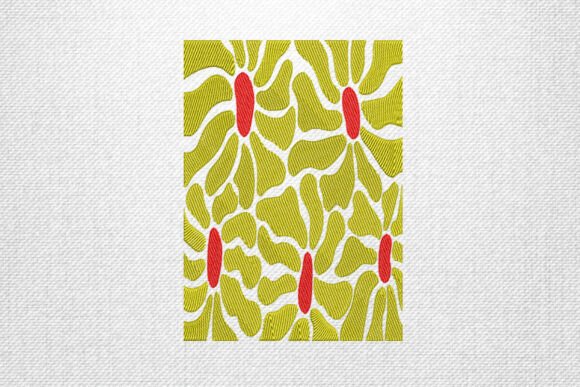
Green Floral Branch
A Craft Fair Designer’s Real-World Review
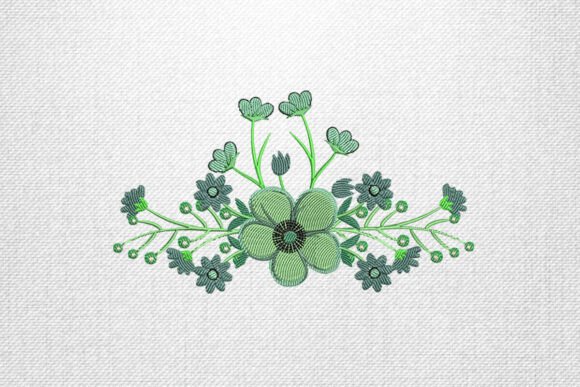
As someone who’s stitched, sold, and restocked at over 40 craft fairs—and built a small embroidery business around market-ready designs—I opened Green Floral Branch with one question: Will this stop someone mid-aisle? The answer is yes—but only if it’s placed right. This isn’t a loud, graphic statement piece. It’s a quietly confident Single Flowers design that leans into freshness, balance, and botanical realism. Think “elegant but approachable,” not “farmhouse rustic” or “minimal modern.” It reads as premium handmade—not mass-produced—and carries that subtle sophistication customers associate with curated boutiques and thoughtful Etsy sellers.
Where Green Floral Branch Shines on Craft Fair Products
On a crowded table full of embroidered totes, aprons, and tea towels, Green Floral Branch stands out by breathing. Its layered leaves and blooming flowers create gentle movement—no hard edges, no aggressive symmetry. That makes it ideal for:
- Tote bag design: Centered on the front panel (10–12" wide), it reads clearly from 6 feet away. The vertical stem guides the eye upward, adding height and grace to an otherwise flat surface.
- Apron embroidery: Positioned just above the pocket or along the waistband curve, it softens utilitarian fabric without overwhelming function. Customers consistently reach for aprons with botanical accents—they signal care, craft, and calm.
- Tea towel embroidery: Works beautifully in the lower corner or centered near the hem. Because the design includes varied leaf sizes and open negative space, it doesn’t fight textured terry cloth—it nestles into it.
- Embroidered patch: At 3–4" tall, Green Floral Branch retains definition when heat-applied to denim jackets or canvas pouches. Its organic shape avoids the stiffness common in geometric patches.
- Pillow cover & small pouch embroidery: Scales down gracefully. The stem anchors the composition; even reduced to 2.5", the floral rhythm stays legible.
It’s less effective on curved surfaces like caps—unless resized and repositioned carefully—because the delicate flower centers and thin stem lines can distort under tension. Likewise, avoid placing it across seams or heavy darts where stitch density may shift unpredictably.
What Makes Green Floral Branch a Smart Batch Production Choice
This is where Green Floral Branch earns its spot in your core rotation of machine embroidery designs. It’s intuitive at a glance: no hidden motifs, no confusing layers, no ambiguous outlines. That means faster hooping, fewer thread breaks, and smoother transitions between fabric types. As a digital embroidery file, it performs well across common commercial hoop sizes—just confirm your vendor’s recommended hoop before cutting batches.
Photography? Exceptional. The contrast between deep greens and soft floral tones translates cleanly to both natural light and studio setups. Use it in your printable mockup library for Etsy listings—it reads as high-end even in flat-lay shots. And because it’s not overly dense, it photographs well on dark fabric if you use bright lime or mint thread colors for key stems and blooms.
For commercial embroidery, this design feels repeatable without fatigue. You won’t tire of stitching it—and neither will your customers. It fits seamlessly into spring collections, garden-themed markets, bridal shower gifts, and wellness-focused boutiques. It supports brand consistency without locking you into one aesthetic.
Careful-Use Notes Every Embroidery Designer Should Check
Don’t skip these practical checks—even experienced makers miss them:
- Stitch density: The flower centers and overlapping leaf veins are detailed. On thick fabric (like duck canvas or quilted tote lining), test with medium-weight cutaway stabilizer. Too light, and detail blurs; too heavy, and the design feels stiff.
- Fabric texture: Avoid pairing with heavily napped or shaggy fabrics—the fine stems may disappear. Stick to smooth cottons, linen blends, and tightly woven twills for best clarity.
- Small-size clarity: Below 2", the smallest petals and stamen lose distinction. Reserve sub-2" uses for patches meant for close-up wear (like lapel pins) or layered appliqué—not standalone embroidery.
- Dark fabric contrast: If stitching on charcoal, navy, or black, choose thread colors deliberately—chartreuse or pale yellow for highlights adds dimension without washing out.
- Curved surfaces: For caps or curved pouch fronts, reduce height by 10% and widen spacing slightly to prevent compression distortion.
Designer Workflow Tips Before Your Next Craft Fair
Before loading Green Floral Branch into your machine or uploading it to your shop:
- Test the embroidery file on scrap fabric matching your intended product—same weight, same finish.
- Check thread contrast against 2–3 fabric swatches. A single green thread won’t capture the depth implied in the description—layer mint, olive, and sage for realism.
- Review spacing between elements. Tight clusters may need slight adjustment for your machine’s jump stitch behavior.
- Confirm hoop size compatibility—especially if using multi-hooping for large tote bags.
- Inspect stitch density visually: does the center of each bloom feel filled but breathable? Or muddy?
- Use the right stabilizer—cutaway for structured items (totes, aprons), tear-away for softer pieces (tea towels, pillow covers).
- Create at least one real mockup, not just digital. Hold it in natural light. Walk away and look back—does it hold attention?
- Compare how it looks on light vs. dark fabric. Adjust thread palette accordingly.
- Verify commercial licensing terms—if selling finished products, ensure your license permits resale of physical goods.
When done right, Green Floral Branch doesn’t just decorate a product—it elevates it. It tells customers you pay attention to line, life, and intention. In a sea of generic florals, it’s the one they’ll pause for, point to, and say, “That’s exactly what my kitchen needs.” That’s not just charm—that’s craft fair conversion.