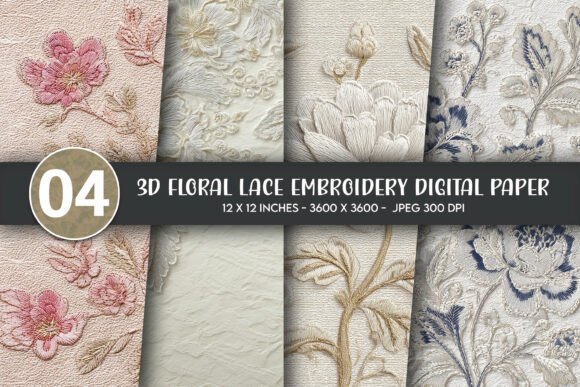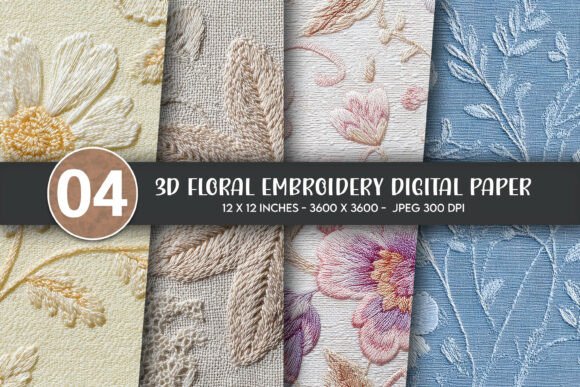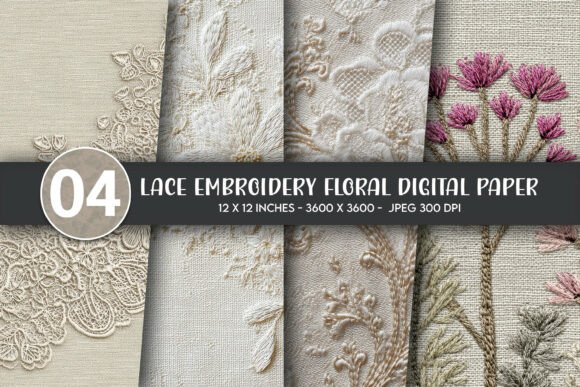
Lace Embroidery Floral Digital Paper
First Impression: Delicate, Timeless, and Booth-Ready
As an embroidery designer who’s set up at over 40 craft fairs—from snowy winter markets to sun-drenched summer pop-ups—I know what catches the eye in under three seconds. Lace Embroidery Floral Digital Paper lands immediately as elegant and decorative, with soft romantic energy—not too sweet, not too stiff. It reads as premium handmade, not mass-produced. That’s gold at a craft fair where shoppers scan tables for authenticity, texture, and intention. The title alone signals refinement: “lace” implies delicacy, “floral” suggests versatility, and “digital paper” tells me this is a clean, scalable illustration—ideal for both print and stitch adaptation.
Where It Shines: Craft Fair Products That Sell
This design doesn’t just look good—it performs. On tote bag designs, it holds presence without overwhelming; centered on natural canvas or oat linen, it reads as thoughtful, giftable, and quietly luxurious. As apron embroidery, placed just above the pocket or along the waistband, it adds artisanal charm without competing with functional details. For tea towel embroidery, its open floral motifs breathe across terry cloth—no drowning in loops or losing definition. And on embroidered patches, it translates beautifully: crisp edges, balanced negative space, and organic flow that feels hand-drawn, not clip-art.
It also excels as a pillow cover focal point (centered or corner-accented), a subtle cap embroidery motif (scaled down thoughtfully), and a refined detail on fabric pouches and market bags. Because it’s rooted in lace-inspired line work—not heavy fill—it avoids looking muddy on textured fabrics or dark backgrounds. As a small shop product, it elevates perceived value instantly: customers associate delicate florals with care, craftsmanship, and attention to detail.
Real-World Production Notes from the Hoop
Before you load Lace Embroidery Floral Digital Paper into your machine, test it—always. Here’s what I check:
- Stitch density: Lace motifs often pack fine lines close together. On dense fabrics like denim or thick twill, excess density can cause puckering. Use lightweight cutaway or tear-away stabilizer—and don’t skip the topper on textured towels.
- Hoop size & spacing: This isn’t a tiny monogram—it needs room to breathe. If your version includes trailing vines or layered petals, confirm the full design fits comfortably within your standard hoop. Crowding distorts delicate curves.
- Fabric texture matters: On waffle-weave tea towels or slubby linen, reduce density slightly and increase underlay. Tiny flourishes may vanish if thread sinks into grooves.
- Thread colors: Soft neutrals (oat, heather grey, ivory) let the lace structure shine. Avoid high-contrast combos unless intentional—e.g., charcoal thread on cream linen for modern edge.
- Dark fabric warning: If stitching on black or navy, verify the file includes sufficient satin stitch coverage or backing layers. Thin outlines can disappear without proper underlay or topping.
Online & Offline Impact: From Etsy Listing to Booth Display
This is where Lace Embroidery Floral Digital Paper earns its keep. As a printable mockup asset, it photographs cleanly—no harsh shadows, no pixelation. Its high-resolution nature means crisp thumbnails for Etsy listings, Instagram carousels, and printed booth signage. Customers scrolling past your shop instantly recognize its cohesion: it works equally well as a digital embroidery file and as a graphics element on greeting cards or mugs.
In person? It draws quiet attention—not loud, but lingering. At a busy fair, it stands out among bolder, busier designs because of its negative space intelligence. Shoppers pause, tilt their heads, touch the fabric—then ask, “Is that all one piece?” That’s your opening to talk process, story, and care.
For brand consistency, it’s highly repeatable. Whether you’re stitching 5 aprons or 50 tote bags, the design retains integrity across batch production—no fading, no scaling distortion, no lost nuance. That reliability builds trust: customers return knowing your floral line stays refined, never sloppy.
Careful-Use Considerations: What to Double-Check
Don’t assume—verify. Even elegant Illustrations can trip you up:
- Tiny details: Petal tips, vine endpoints, or micro-lace gaps may vanish below 2.5” width. Always run a 1.5” test on scrap before committing to caps or onesies.
- Curved surfaces: Caps and mugs demand re-digitizing or careful hooping. If your Lace Embroidery Floral Digital Paper wasn’t pre-optimized for curve, expect stretched stems or misaligned blossoms.
- Small lettering? Not mentioned in the description—so likely absent. Good. Florals without text are more versatile across languages, ages, and aesthetics.
- Commercial licensing: Since this is marketed for mugs, stickers, and more, confirm the license explicitly permits finished-product resale—not just personal use. When in doubt, contact the seller before listing on Etsy or wholesale.
Final Designer Verdict: A Quiet Powerhouse
Lace Embroidery Floral Digital Paper isn’t flashy—but it’s fiercely functional. It bridges digital precision and handmade warmth. It sells because it feels intentional, not incidental. At craft fairs, it anchors displays: pair it with raw-edge linen, dried lavender sachets, and matte ceramic mugs, and suddenly your booth whispers “curated,” not “crowded.”
For Etsy sellers, it’s a smart evergreen asset—seasonless, gender-neutral, and endlessly adaptable across handmade product categories. For Cricut and embroidery crafters, it’s a rare find: decorative without being fussy, detailed without being fragile. And for boutique makers building signature collections? It’s the kind of design asset that becomes a quiet signature—recognized across tote bags, pillow covers, and tea towels, all unified by the same graceful line.
One last note: always create at least one real mockup before fair weekend. Stitch it, photograph it in natural light, hold it beside your other bestsellers—and ask: does it belong? With Lace Embroidery Floral Digital Paper, the answer is almost always yes.