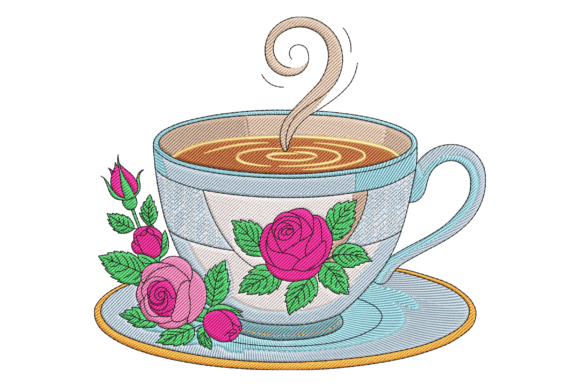
Vintage Floral Teacup
A Design That Whispers, Not Shouts — Perfect for Thoughtful Makes
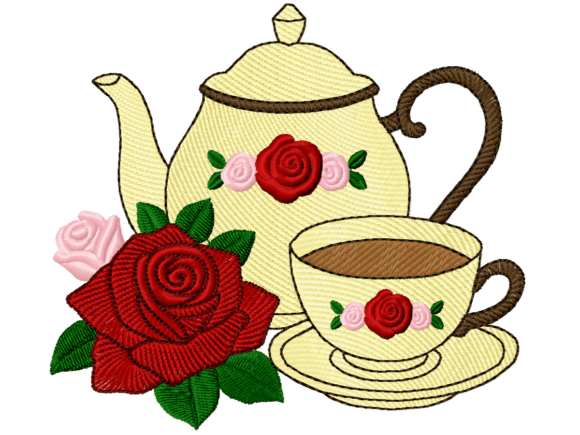
First impression? Vintage Floral Teacup lands softly—like steam rising from a warm cup. It’s not fussy or overwrought, but it’s also not generic. The teacup sits centered, with a gentle curve to its handle and a delicate floral wreath wrapping the rim and base. Petals are suggested, not outlined; leaves flow organically, not rigidly. There’s breathing room—not too dense, not too sparse. This isn’t a design that demands attention; it earns it through quiet confidence. It feels handmade, even before it’s stitched.
Real-Life Test: Embroidering a Linen Tea Towel for a Local Boutique
Last week, I prepped Vintage Floral Teacup for a batch of 12 linen tea towels—custom orders for a neighborhood kitchen shop. The client wanted “timeless, not twee.” We chose natural undyed linen and soft ecru thread. When stitched, the design held its shape beautifully: the satin-stitched cup rim stayed crisp, the fill-stitch florals read clearly without bleeding, and the subtle running-stitch vines added movement without overwhelming the fabric’s texture. Customers noticed it immediately—not as “cute,” but as *considered*. One buyer said, “It looks like something my grandmother would’ve kept in her china cabinet—and loved using every day.” That’s the sweet spot.
Where Vintage Floral Teacup Shines (and Where It Asks for Care)
This design thrives in contexts where warmth, heritage, and tactile authenticity matter:
- Custom apparel: Works elegantly on lightweight sweatshirts and structured cotton tees—especially when placed left-chest or centered on the back. Avoid overly bulky fleece; the detail can get lost.
- Tote bag design: A standout on natural canvas or medium-weight denim. The scale holds up well at 3.5–4 inches wide, and the open negative space prevents visual fatigue.
- Baby embroidery: Ideal for onesies, burp cloths, or crib bumper accents—provided you use ultra-soft stabilizer and low-density stitching. The gentle curves feel nurturing, not ornate.
- Embroidered patch: Translates cleanly to twill or felt backing. The clean outer edge makes cutting and sealing easy, and the motif reads well at 2.75 inches—perfect for lapel or sleeve placement.
- Holiday embroidery & wedding gifts: Fits seamlessly into bridal shower towels, monogrammed napkin sets, or vintage-inspired Christmas stockings. It carries tradition without leaning into cliché.
Use With Intention—Not Every Surface Is Equal
Vintage Floral Teacup is graceful, but it’s not indestructible. On textured fabrics like bouclé or thick terry cloth, fine vine details may soften or disappear. On stretchy knits, the cup’s curved lines can distort unless hooped with firm cutaway stabilizer and stitched with reduced tension. Dark fabric demands careful thread color testing—ecru or oatmeal thread reads warmly on navy or charcoal, but pale yellow can vanish. And avoid placing it on highly curved surfaces like cap fronts unless you reduce the design size by at least 15% and confirm stitch density stays under 12,000 stitches for smooth travel.
What It Adds to Your Finished Product—Beyond Aesthetics
This isn’t just decoration. Vintage Floral Teacup elevates perceived value. On an Etsy listing, it signals care in curation—not just another machine embroidery design downloaded and stitched. Buyers associate it with intentionality: the kind of detail that makes a personalized gift feel truly *given*, not just made. For small shop owners, it supports brand consistency when used across tea towels, aprons, and matching pillow covers—it’s cohesive without being repetitive. And for craft fair sellers, it sparks conversation: “Is that hand-drawn?” (It’s not—but it feels like it could be.) That trust builds repeat customers.
Practical Designer Notes Before You Stitch
- Always test on scrap fabric first—especially if pairing with textured or dark materials. Check how the floral fill reads at your intended size.
- Review stitch density. If your machine struggles with tight fills, consider lightening the floral areas slightly in editing software—or opt for a lighter fill stitch type.
- Confirm hoop size compatibility. Vintage Floral Teacup fits comfortably in a 4x4 hoop at standard size, but verify before nesting multiple designs.
- Inspect small details: the tip of the handle, the inner curve of the cup, and the separation between petals. These are where thread breaks or skipped stitches often hide.
- Test black-and-white mockups—not just color. Does the silhouette hold up? Does it still feel balanced without hue guiding the eye?
- Use proper stabilizer: medium-weight tear-away for stable wovens, cutaway for knits or delicate linens.
- Check licensing before selling finished items or bundling Vintage Floral Teacup as part of a digital product. Some versions allow commercial use; others don’t. Don’t assume.
Final Thought: A Design That Grows With You
Vintage Floral Teacup doesn’t shout “trend.” It settles in. It works for a baby’s first embroidered bib and a retiree’s custom tea cozy. It fits a minimalist Etsy shop and a full-service embroidery studio doing boutique branding. That versatility comes from restraint—not overcrowding, not oversimplifying, but honoring the rhythm of the teacup, the weight of the bloom, the quiet joy of a well-made thing. If you’re choosing embroidery files for real projects—not just practice—you’ll reach for Vintage Floral Teacup again and again. Not because it’s flashy, but because it’s right.